No narrative in the Quran shines with more beauty and profound lessons than the story of Prophet Yusuf, peace be upon him.
The Quran dedicates an entire chapter to his story... calling it "the most beautiful of stories."
Yusuf was the son of Prophet Yaqub and his beloved wife Raheel. From his earliest days, he displayed extraordinary beauty, intelligence, and spiritual sensitivity.
As a young boy... he experienced a prophetic dream.
He saw eleven stars, the sun, and the moon — all prostrating to him!
His father Yaqub immediately understood the significance — Allah had chosen Yusuf for a special purpose.
But he warned his son urgently: "Do not relate your vision to your brothers... or they will plot against you!"
Despite this caution, Yaqub's obvious affection for Yusuf planted seeds of jealousy in his older brothers' hearts.
Their jealousy festered... until it transformed into conspiracy.
"Kill Yusuf!" some debated. "Or cast him out to some distant land!"
Finally, one brother suggested a less violent alternative: "Throw him into the bottom of a well. Some travelers will pick him up."
The brothers convinced Yaqub to let Yusuf accompany them on an outing.
At a remote location... they seized young Yusuf and cast him into a well!
They returned to their father with Yusuf's shirt stained with sheep's blood, claiming a wolf had killed him.
Yaqub, examining the garment, noticed it was stained but not torn — no wolf attack would leave a shirt intact!
"Rather, your souls have enticed you to something," he replied quietly. "So patience is most fitting."
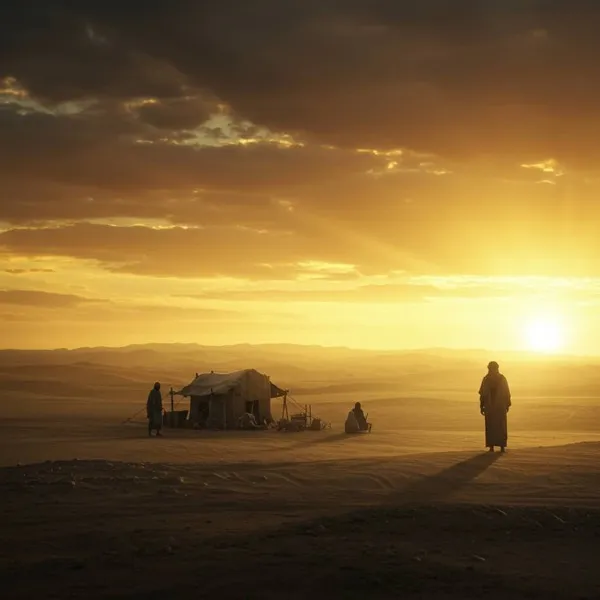
The next day, a caravan discovered Yusuf in the well... and took him to Egypt.
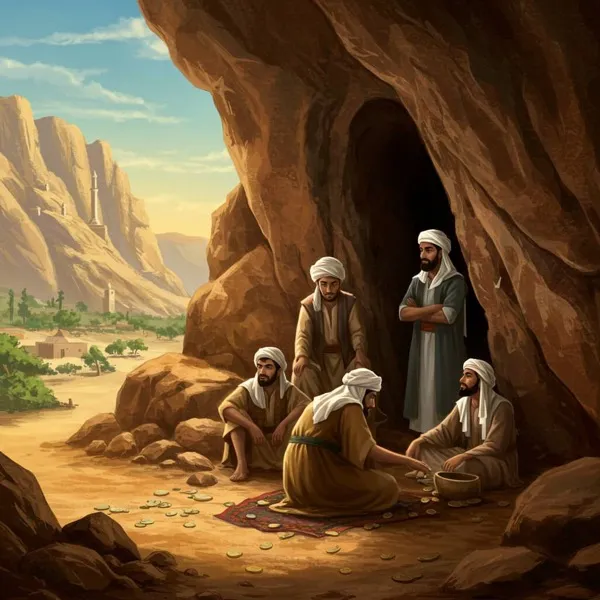
He was sold to a high-ranking official named Al-Aziz. Recognizing Yusuf's exceptional qualities, Al-Aziz treated him well — giving him opportunities to develop skills in administration and leadership.
As Yusuf grew into young manhood... his extraordinary beauty became the source of a great trial.
The Trial of Temptation
The wife of Al-Aziz, known in Islamic tradition as Zulaikha, became captivated by Yusuf's beauty. One day, when they were alone in the palace, she locked the doors and said: "Come to me!"
Yusuf's response was immediate and resolute: "I seek refuge in Allah! He is my Lord who has made my stay excellent. Indeed, wrongdoers will not succeed" (Quran 12:23). In that moment of intense temptation, Yusuf chose obedience to Allah over desire. He turned and raced toward the door.
Zulaikha pursued him and grabbed his shirt from behind, tearing it. At that very moment, the door opened and Al-Aziz stood before them. Zulaikha immediately accused Yusuf: "What is the recompense of one who intended evil for your wife?"
But Yusuf declared his innocence, and a witness from Zulaikha's own household offered a decisive test: if Yusuf's shirt was torn from the front, she was truthful; if it was torn from behind, she was lying. When Al-Aziz examined the garment, the tear was clearly from behind — proving Yusuf's innocence and Zulaikha's guilt.
The Women of the City
Word of the incident spread through the city. The women of Egypt whispered among themselves, mocking Zulaikha for falling for a slave. To defend herself, Zulaikha devised a plan. She invited the prominent women to a banquet and gave each of them a knife. As they were cutting fruit, she called Yusuf to enter the room.
When the women saw his face, they were so stunned by his beauty that they cut their own hands without realizing it. They exclaimed: "This is no mortal! This is none but a noble angel!" (Quran 12:31).
Zulaikha then revealed: "That is the one you blamed me for. I did seek to seduce him, but he firmly refused." She threatened that if Yusuf did not comply with her demands, he would be imprisoned.
Faced with this ultimatum, Yusuf turned to his Lord in one of the most powerful supplications recorded in the Quran: "My Lord, prison is more to my liking than what they invite me to. And if You do not avert from me their plan, I might incline toward them and be of the ignorant" (Quran 12:33).
Allah answered his prayer. Yusuf was protected from sin — but he was sent to prison.
The Years in Prison
In the darkness of the Egyptian prison, Yusuf's faith never wavered. Two young men were imprisoned alongside him. One dreamed he was pressing wine; the other dreamed he was carrying bread on his head that birds were eating from.
They turned to Yusuf for interpretation, recognizing his righteousness. Before interpreting their dreams, Yusuf seized the moment to call them to the worship of the One God: "Are many different lords better, or Allah, the One, the Prevailing?" (Quran 12:39).
He then told the first man he would serve wine to the king again, and the second that he would be crucified. Both interpretations came to pass exactly as Yusuf had described. Yet the freed companion forgot to mention Yusuf to the king, and Yusuf remained in prison for several more years.
The King's Dream and Yusuf's Rise
Then came a turning point that would change everything. The King of Egypt was troubled by a mysterious dream: he saw seven fat cows being devoured by seven lean cows, and seven green ears of grain alongside seven dry ones. None of his advisors could interpret it.
The freed prisoner finally remembered Yusuf. He rushed to the prison and asked for the dream's meaning. Yusuf interpreted it with clarity: Egypt would enjoy seven years of abundance, during which they should store grain wisely. These would be followed by seven years of severe famine that would consume all they had saved, and after that a year of relief when people would be blessed with rain.
The king was astonished by the interpretation. He ordered Yusuf to be released immediately. But Yusuf, in a remarkable display of integrity, refused to leave prison until his name was cleared. He asked the king to investigate the matter of the women who had cut their hands. When questioned, the women — including Zulaikha herself — admitted: "Now the truth has become evident. It was I who sought to seduce him, and indeed, he is of the truthful" (Quran 12:51).
With his innocence publicly declared, Yusuf was brought before the king. Impressed by his wisdom and character, the king appointed Yusuf as the minister in charge of Egypt's storehouses — a position of immense authority. From the depths of a well and the darkness of a prison, Prophet Yusuf had risen to become one of the most powerful men in the land.
The Brothers Return
The seven years of abundance passed, and the predicted famine struck — not only Egypt but the surrounding lands, including Canaan where Prophet Yaqub and his sons lived. The brothers traveled to Egypt to buy grain, unaware that the powerful minister they stood before was the very brother they had thrown into a well years ago.
Yusuf recognized them immediately, but they did not recognize him. He gave them their provisions but asked them to bring their youngest brother, Binyamin, on their next visit. Through a series of divinely guided events, Yusuf arranged to keep Binyamin with him in Egypt, which caused immense grief to their father Yaqub — whose sorrow for Yusuf had already turned his eyes white with weeping.
The Emotional Reunion
When the brothers returned to Egypt once more, humbled and desperate, Yusuf could no longer contain himself. He revealed his identity in one of the most emotional moments in all of Quran stories: "I am Yusuf, and this is my brother. Allah has certainly been gracious to us" (Quran 12:90).
The brothers were stunned. Shame and guilt washed over them as they realized the gravity of what they had done. But Yusuf's response was one of extraordinary mercy: "No blame will there be upon you today. Allah will forgive you, and He is the most merciful of the merciful" (Quran 12:92).
He gave them his shirt and told them to place it over their father's face. When the shirt of Yusuf was laid upon Yaqub's eyes, his sight was miraculously restored — a beautiful parallel to the shirt stained with false blood that had once torn this family apart.
The Dream Fulfilled
The entire family traveled to Egypt. When they entered upon Yusuf, he raised his parents upon the throne, and they all fell down in prostration before him — his father, his mother, and his eleven brothers. The childhood dream of eleven stars, the sun, and the moon prostrating had been fulfilled, decades later, through Allah's perfect plan.
Yusuf turned to his father and said: "O my father, this is the interpretation of my dream from before. My Lord has made it reality" (Quran 12:100).
And then, in a moment of profound gratitude, Yusuf raised his hands and made one of the most beautiful supplications in the Quran: "My Lord, You have given me of sovereignty and taught me of the interpretation of dreams. Creator of the heavens and earth, You are my protector in this world and in the Hereafter. Cause me to die a Muslim and join me with the righteous" (Quran 12:101).