Continue Listening in the App
Experience the full story of The Story of the Heifer with professional narration and immersive ambient sounds.
About This Story
Quran Reference
Surah Al-Baqarah (2:67-73)
Key Themes
Audio Duration
8 min of professional narration
Available In
English, Arabic, German, Dutch, French, Turkish
Key Lessons from This Story
- Obey Allah's commands promptly and without excessive questioning — The central lesson of this story is that when Allah commands, the believer's response should be "We hear and we obey" (sami'na wa ata'na). Bani Israel could have slaughtered any cow and the miracle would have occurred. Instead, their relentless questioning narrowed the specifications to a nearly impossible standard. This teaches that excessive questioning about divine commands — when the command is clear — is a sign of reluctance, not piety.
- Making things difficult for yourself is self-defeating — Each question Bani Israel asked made their task harder. The cow went from any cow to a middle-aged cow, then to a bright yellow one, then to one that was unblemished and never used for labor. The price they had to pay grew astronomically. This is a universal principle: when we complicate what Allah has made simple, we create unnecessary burdens for ourselves. The Prophet Muhammad (PBUH) warned: "Leave me with what I have left you. Those before you were destroyed because of their excessive questioning and disagreeing with their prophets."
- Allah's power over life and death is absolute — The dead man rising to name his killer was a miracle that demonstrated Allah's complete authority over life and death. No medical science, no human intervention could have achieved this. It served as proof to Bani Israel — who had witnessed the parting of the sea but still struggled with faith — that Allah's power is limitless and His justice is inescapable.
- No crime remains hidden from Allah — The murderer thought he had committed the perfect crime. He disposed of the body, mingled with the crowd, and wept false tears. But Allah, Al-Alim (the All-Knowing), exposed him through a means no one could have anticipated. This reassures believers that ultimate justice belongs to Allah, and it warns wrongdoers that concealment from humans does not mean concealment from the Creator.
- The virtue of trust and righteousness across generations — The righteous father who left his orphan son a single cow and prayed for its protection is a subtle but powerful element of this story. His trust in Allah ensured that his son's inheritance became the most valuable cow in the land. This teaches that righteous parents who place their trust in Allah will see their children protected, even after they are gone — a lesson in the power of sincere du'a and righteous living.
Historical and Theological Context
The story of the heifer is found in Surah Al-Baqarah (2:67-73) and is so significant that it gives the entire surah its name. Surah Al-Baqarah is the longest chapter in the Quran, containing 286 verses, and it was among the first surahs revealed in Medina after the Hijrah. The naming choice is deeply instructive — Allah chose to title this monumental surah not after one of its many grand themes (such as the story of Adam, the change of the Qiblah, or the verse of the Throne), but after a cow that Bani Israel were reluctant to slaughter. This emphasizes how seriously Allah views the sin of hesitation and excessive questioning when a clear divine command has been given.
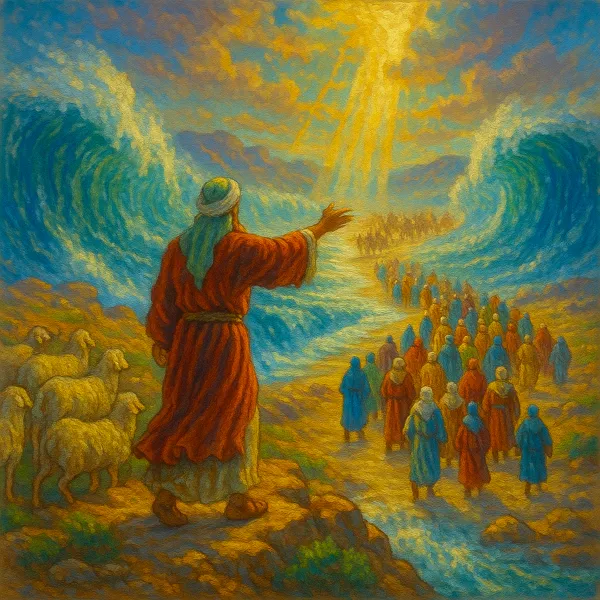
The historical context places this event during the time of Prophet Musa (AS), after the Exodus from Egypt. Bani Israel, despite witnessing extraordinary miracles — the parting of the Red Sea, the provision of manna and quail, the shade of clouds in the desert — continued to struggle with obedience. Classical commentators such as Ibn Kathir, At-Tabari, and Al-Qurtubi provide additional details from Israelite traditions (isra'iliyyat) about the murder victim being a wealthy elder killed by his greedy nephew. While these supplementary details help flesh out the narrative, the Quran's focus remains firmly on the dialogue between Musa and his people, and the lessons embedded within their excessive questioning.
From a jurisprudential perspective, this story has had a lasting impact on Islamic legal methodology. Scholars cite it when discussing the principle that unnecessary questioning about divine commands can lead to stricter rulings. The Prophet Muhammad (PBUH) himself referenced this principle in an authentic hadith: "The worst criminal among the Muslims is one who asked about something that had not been prohibited, and it became prohibited because of his asking" (Sahih al-Bukhari). The story also demonstrates the concept of mu'jizah (prophetic miracle) — the dead man's temporary resurrection was a miracle given to Musa as proof of his prophethood and as a means of establishing justice. This type of miracle, where the natural order is suspended by Allah's will, is a recurring theme throughout the Quran's prophetic narratives.